The Wrong Lesson Schools Learned From Video Games
Games persuade people to attempt hard things, fail and try again. Schools borrowed the scoreboard instead. Five things to steal, one to refuse.
What games understand about learning, and what schools should never copy.
I've spent my career in games and media. I also help govern a school.
Both worlds think a lot about attention. But they should want very different things from it.
I've watched a ten-year-old in a playtest fail at the same challenge again and again. Nobody is grading them. Nobody is making them continue. They get frustrated, change tactics and try again, leaning closer to the screen.
Then they win and can tell you exactly what they figured out.
Put the same kid in front of much easier homework and you can get the opposite response.
The easy explanation is that games are fun and school is work. But good games are often brutally demanding. Players memorize systems, develop strategies, seek help, practice for hours and voluntarily repeat things they cannot yet do.
The difficulty isn't a bug. It's the point.
Seymour Papert at MIT had a wonderful term for this. He called it hard fun. Children, he argued, don't necessarily want learning made easy. They become deeply engaged precisely because something is hard.
James Paul Gee later explored many of the same ideas through video games and learning. Game designers came at the problem from another direction. Build something people can walk away from at any moment, watch where they quit, and you learn quickly how challenge, feedback and motivation interact.
None of this means schools should become video games.
In practice, I've observed that schools often borrowed the parts of games that are easiest to see.
Too often, that meant the scorekeeping. Points, badges, streaks and leaderboards. I've reared three kids and watched for years from across the kitchen table as their schools implemented different versions of “gamification” that left uninspired assignments intact while adding a scoring system on top.
But the interesting thing about a good game isn't the score. It's what happens between attempts. Anyone who has shipped a game knows the points are the cheap part. The hard work is tuning challenges, feedback, failure, choice and progress until the player wants another attempt.
There are five parts of that loop worth stealing. And one thing from the games business that schools should refuse.
Underneath all six lies the key question. Who controls the student's attention?
1. Put the challenge within reach.
Good games constantly manage the distance between I can already do this and I have no idea how to do this.
Too easy and attention disappears. Too hard and effort begins to feel pointless.
Teachers face a much harder version of that problem every day. Students arrive with different skills, confidence and prior knowledge, yet much of school still asks them to proceed through the same material on roughly the same timetable.
Hard fun lives somewhere in that gap. Something genuinely difficult that the student can plausibly conquer.
2. Give feedback while it can still change the next decision.
Games are feedback machines.
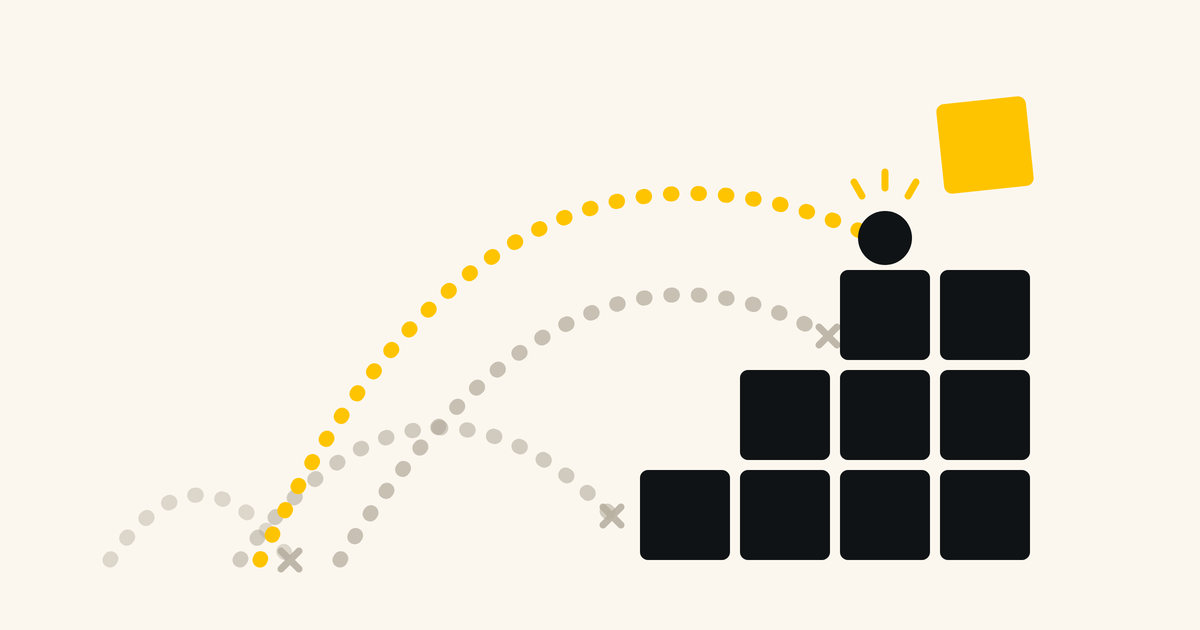
Try something. See what happens. Adjust. Try again.
Compare that with submitting an assignment and receiving a grade days later. The grade may evaluate the work accurately while doing relatively little to improve the thinking that produced it.
Feedback doesn't have to be instantaneous. It has to arrive while the learner can still act on it.
3. Separate failure from punishment.
Failure in a good game is information.
Wrong weapon. Missed jump. Misread pattern. Bad strategy.
Try again.
School can't make every consequence disappear, nor should it. Eventually performance has to count.
But learning requires a period in which being wrong is cheap enough that a student will risk being wrong.
Too often we collapse practice and judgment into the same event. Attempts generate points. Points become grades. Grades become averages. Students rationally begin protecting the average.
I know because I helped. I remember coaching my own kids on how to game a syllabus. Without quite realizing it, I was teaching them to avoid exactly the situations in which learning was most likely to occur.
My day job had already taught me a better model. More drafts. More rehearsal. More low-stakes attempts. More opportunities to discover, That didn't work. Why?
Papert treated this as the heart of learning to think. Watching children program, he argued that debugging, locating your own error and fixing it, wasn't the price of the work. It was the work.
Games don't eliminate failure. They make failure usable.
4. Give people meaningful choices.
Good games constantly impose constraints. Inside those constraints, they leave room to decide.
Which route? Which tool? Which strategy?
That matters because ownership changes effort.
Schoolwork can remove both kinds of agency. The destination is assigned and every step for getting there is prescribed.
Sometimes that's necessary. Sometimes it's just habit.
Agency doesn't mean “do whatever you want.” It means leaving enough room for judgment that success feels partly authored rather than merely complied with.
5. Make improvement visible.
Games constantly show players that they can do something today they couldn't do yesterday.
Levels, skill trees and unlocks are crude manifestations of a deeper principle. Progress is motivating when you can see it.
Education measures students constantly. But measurement and visible growth aren't the same thing.
A student can accumulate years of grades without developing a particularly clear picture of what they can now do that they once couldn't.
The part schools should refuse
The art of game design can be pointed at two very different goals.
You can design a system to increase someone's capability.
Or you can design one to acquire more of someone's time.
I've worked in entertainment long enough to understand the difference, and the economics behind it. A premium game and a free-to-play game can create very different incentives for what happens after the player has already had a good time.
The behavioral tools that help someone persist through a difficult challenge can also keep someone clicking, scrolling, protecting a streak or coming back tomorrow because retention numbers are slipping.
That doesn't make entertainment bad. Great entertainment creates joy, community, competition, beauty and experiences people remember for decades.
But entertainment and education have fundamentally different obligations to attention.
A commercial product can reasonably ask, How do we get another ten minutes?
A school eventually has to ask, Can this young person decide what deserves the next ten minutes?
That's a much higher standard. And it's why engagement, by itself, isn't an educational outcome.
So when someone pitches a school on an “engaging” new product, these are the things I would start to ask.
1. Is the work appropriately difficult for the student doing it?
2. Does the feedback change what the student can do next?
3. Can students make mistakes before those mistakes become consequential?
4. Where does the student exercise real judgment?
5. Can students see their own growth?
6. What behavior has this product actually been optimized to produce?
That last question comes from the commercial side of the table. If you really want to understand the product, ask the product manager what gets measured. Better yet, ask what number they are personally expected to move.
Don't just ask what the product does. Ask what gets better when the numbers on its dashboard go up.
If the answer starts with student capability, keep talking.
If the answer is principally minutes, sessions, streaks or daily active users, understand what you're buying.
Papert's idea of hard fun gives us a useful standard.
Kids don't need us to make everything easy. They need challenges worth caring about, room to struggle, useful feedback, real choices and enough time to discover that they can do something today they couldn't do yesterday.
The goal isn't to make school more addictive. It's to make difficult things worth doing.
That's the territory I want to explore in Hard Fun, and it's larger than games.
Our kids are growing up with enormous competition for their attention. Nearly every screen they touch is built by professionals who are paid to win some of it.
The educational question is whether we can raise young people capable of exercising judgment over that competition and deciding for themselves what deserves the next ten minutes.
Games are my opening lens because it's a world I know. Education is where the stakes become clear.
AI, phones, algorithms, assessment, agency and whatever comes next will each get their turn.
If you make games, teach, parent or govern a school, I'd like to hear where you've seen genuine hard fun flourish, and where we've accidentally designed it out.
Further reading: Seymour Papert, “Hard Fun” and “Does Easy Do It? Children, Games, and Learning”; James Paul Gee, What Video Games Have to Teach Us About Learning and Literacy; Nicole Lazzaro, “4 Keys 2 Fun”; Daniel Willingham, Why Don't Students Like School?